

Most households already have a routine for laundry. Shirts, pants, towels, and everyday clothing get washed on a regular schedule, often without much thought. The larger textiles that fill a home, however, tend to fall through the cracks. A comforter that has been in use for a year, a set of table linens that saw several dinner parties, drapes that have been filtering dust and pollen since the last time they were aired out. These fabrics accumulate body oils, skin cells, food residues, pet dander, and airborne particles at a steady pace, and the longer they go without a thorough cleaning, the more of that buildup becomes embedded in the weave.
Caring for household fabrics properly means thinking about them as part of your home’s overall maintenance, not just as decorative elements that get addressed when they look noticeably soiled. The good news is that a few consistent habits, combined with the occasional professional cleaning, can keep these textiles looking fresh and performing well for years.
Why Household Fabrics Deserve Regular Care
Household fabrics are almost always cleaned less frequently than the clothes you wear, and that gap matters more than most people realize. A pair of running shoes gets washed or spot-cleaned after a handful of uses. A fitted sheet, by contrast, might go several months between washes, especially if it’s tucked under a comforter that rarely comes off the bed. During that time, the fabric is doing a lot of quiet work. It’s absorbing moisture from your skin, catching loose skin cells, trapping dust that settles from the air, and holding onto any small spills or stains that weren’t immediately treated.
The structure of these larger textiles makes them particularly good at trapping particles. Woven sheets and pillowcases have tight enough threads to hold fine dust and allergens close to the surface. Comforters, blankets, and upholstered pieces have depth and loft, which means debris can settle into layers that a quick shake or surface vacuum won’t reach. Over weeks and months, that trapped material can contribute to the overall allergen load in a bedroom or living area, and for anyone sensitive to dust mites, pet dander, or mold spores, that accumulation is not just a comfort issue. It’s a health consideration.
Regular cleaning of these fabrics supports a healthier home environment in a straightforward way. Removing the accumulated particles, oils, and residues reduces the food source for dust mites and other microscopic organisms that thrive in fabric. It also prevents the gradual darkening and stiffening that happens when body oils and dirt work their way into the fibers over time. You don’t need a clinical-level cleaning schedule to see the difference, but treating household textiles with the same consistency you’d give your wardrobe makes a real difference in how your home feels and how well those fabrics age.
Common Household Fabrics That Benefit From Professional Cleaning
Not every household textile is the same, and the ones that benefit most from professional cleaning tend to share a few characteristics: they’re large, they’re constructed in ways that make home washing difficult, or they’re used in ways that subject them to particular kinds of wear.
Bedding and linens include fitted sheets, flat sheets, pillowcases, and duvet covers. While many of these can be laundered at home, the sheer volume and the way they’re tucked and bunched in a washing machine can lead to uneven cleaning, especially around elastic bands, seams, and the areas that contact your skin most directly. Professional cleaning ensures the entire surface is treated evenly, and the high-heat finishing steps can help remove residual odors that a standard home cycle might leave behind.
Comforters, blankets, and throws present a different challenge. Their size and weight make them awkward in a standard washer and dryer, and the internal construction, whether it’s a down fill, a synthetic cluster, or a layered quilt, can be damaged by the agitation of a home machine. A professional facility has the equipment to handle the volume and the fill type appropriately, and the process is calibrated to clean without clumping the insulation or stressing the outer shell.
Tablecloths and dining linens see a different kind of wear. Wine, oil, sauces, and other food residues can set into the fabric if they’re not treated promptly, and the starch or sizing that gives these linens their crisp drape can break down in a home wash that’s too hot or too aggressive. Professional cleaning handles the stain treatment and the finishing press in a way that preserves both the color and the structure of the fabric.
Drapery and larger soft furnishings are among the most commonly overlooked items in a household cleaning routine. Curtains, roman shades, and decorative panels collect dust continuously because they hang in open spaces, and their length and mounting hardware make them impractical to wash at home. Professional cleaning can address the full length of the fabric, including the areas near the floor where pet dander and kitchen grease tend to concentrate.
Household items that require specialty handling round out the list. This might include embroidered table runners, a family quilt with hand-stitched details, a set of linen napkins with a particular weave, or a decorative cushion with a delicate fabric face. These pieces often carry care labels that recommend dry cleaning or professional laundering, and the reason is practical: the construction, the dye, or the fiber type simply won’t survive a standard home wash without risk of shrinkage, color loss, or damage to the stitching.
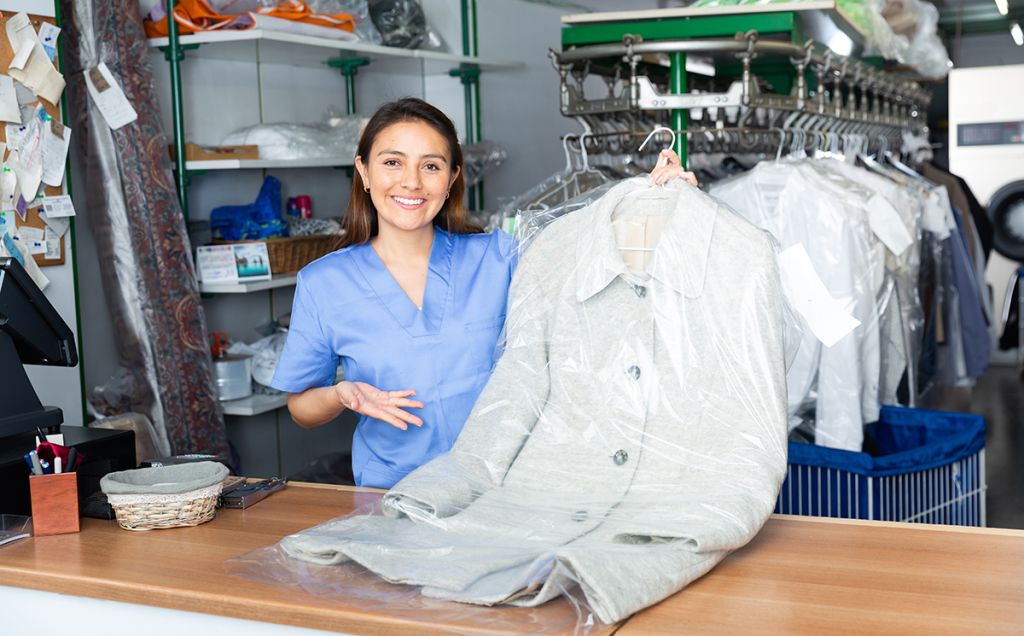
Preparing Fabrics for Professional Cleaning
A little preparation before you drop off your household fabrics makes the cleaning process smoother and helps ensure the items are treated the way they need to be. You don’t need to do anything elaborate, but a few minutes of attention goes a long way.
Start by sorting your items by fabric type and cleaning need. If you’re bringing a mix of cotton sheets, a down comforter, and a silk-blend tablecloth, keeping them separated and loosely grouped helps the cleaning team identify the appropriate process for each piece. You don’t need to label them, but a quick mental note or a sticky note on a particularly delicate item can prevent confusion.
Before you bag anything up, take a moment to check for stains, loose threads, missing buttons, or existing damage. If there’s a wine mark on a tablecloth or a small tear near a pillowcase seam, pointing it out when you drop the item off gives the cleaner a chance to address it specifically. Small repairs, like re-securing a loose hem or reinforcing a weak seam, are often handled as part of the service, but the cleaner needs to know where to look.
Read the care label on each item if you haven’t already. Most household textiles carry a label that indicates whether they should be dry cleaned, machine washed, or handled with particular care. If you have a specific concern, such as a color that you’re worried might shift or a fabric that has been previously treated with a stain guard, jot it down or mention it when you hand the item over. That small detail can guide the cleaning approach and help avoid an unwanted result.
For delicate or heavily used pieces, a bit of extra protection before transport is sensible. If a throw has a few small snags, tuck it loosely in a laundry bag rather than letting it rub against other items in your car. If a comforter has a down fill that’s a little lumpy from storage, give it a gentle shake before you bag it so the fill redistributes. These are small steps, but they reduce the chance of additional wear or shifting during transit.
Benefits of Professional Cleaning and Ongoing Fabric Maintenance
The most immediate benefit of professional cleaning is access. A home washing machine tumbles, agitates, and rinses, but it can’t replicate the controlled processes that a professional facility uses. Solvent-based cleaning, targeted stain treatment, high-heat finishing, and the kind of pressing that restores a linen napkin to its original crispness are all steps that go well beyond what a residential appliance can do. For fabrics with delicate weaves, specialty dyes, or complex construction, that difference is the line between a fabric that comes back looking like new and one that comes back looking tired.
That level of care also extends the life of your fabrics in a meaningful way. When a comforter is cleaned with a process matched to its fill type, the down or synthetic clusters stay separated and the outer shell doesn’t degrade from harsh agitation. When a tablecloth is finished with a proper press rather than pulled from a dryer still damp, the starch or sizing that gives it structure is set correctly rather than broken down. Over the course of a few years, those small differences add up. A well-maintained set of linens or a quality comforter can last considerably longer than one that’s been through repeated rough home washes.
Convenience is another factor that makes professional cleaning more practical than it used to be. At Prestige Cleaners, for example, same-day processing means many items dropped off by mid-morning can be ready by the end of the business day, and 24-hour drop boxes and pickup lockers let you drop off or collect items outside of regular store hours. Free pickup and delivery through a route service removes the transport step entirely. For a family juggling work, school, and everything in between, the ability to hand off a bag of linens or a comforter without building a trip around a specific store window is a genuine time-saver.
There’s also an environmental dimension worth considering. Professional cleaning facilities process large volumes of water and solvent in a way that allows for recycling and controlled disposal, which is harder to manage at the household level. Many facilities, including Prestige Cleaners, use eco-friendly cleaning solutions designed to reduce the environmental footprint of the process while still delivering a thorough clean. When a comforter or a set of drapes is cleaned properly and lasts for years rather than being replaced after a couple of rough home washes, that also means less textile waste ending up in a landfill.
Between professional cleanings, a few simple habits help keep household fabrics in good shape. Air out bedding and linens on a dry, breezy day when the weather allows. A comforter or a set of sheets hung on a clothesline for a couple of hours picks up a freshness that a storage closet can’t provide, and the airflow helps wick out residual moisture. Address small stains promptly with a gentle spot treatment rather than letting them set. A quick blot with a damp cloth and a mild detergent can prevent a small food mark from becoming a permanent stain. And if you have seasonal textiles, like a winter quilt or a summer set of light drapes, rotate them through storageso each piece gets a rest period. That rest gives the fibers time to recover their natural shape and reduces the cumulative wear that comes from constant use.
Keeping your household fabrics in good condition doesn’t require a complicated system. It takes a little attention to what’s accumulating, a few practical steps before and after a professional cleaning, and the willingness to treat those larger textiles with the same care you’d give a favorite coat or a good pair of shoes. If you’re in the Scottsdale or Carefree area and you’ve got a comforter that’s due for a proper cleaning, a set of linens that could use a fresh finish, or drapes that haven’t seen a thorough wash in a while, the team at Prestige Cleaners is ready to help. With eight locations across the Valley, same-day options, and flexible drop-off and pickup, getting your household fabrics cleaned is easier than you might expect.
Household fabrics that are large, heavily used, or made from delicate fibers benefit most from professional care. Bedding such as sheets, pillowcases, and duvet covers collects skin cells, oils, and sweat over time, while comforters and quilts trap dust and allergens in thick layers that home machines cannot fully flush out.
Tablecloths, napkins, and dinner linens are often stained by food, wine, and grease that require specialized stain treatment to avoid setting. Upholstered throws, drapery panels, and decorative cushions also fall into this category because they combine delicate fabrics with construction details that can be damaged by high heat or aggressive agitation.
Professional cleaning is especially valuable for items labeled dry clean only, items with intricate embroidery, or fabrics that shrink, fade, or lose shape in a home washer. The benefit is greatest when the fabric is both high value and regularly exposed to body oils, food, or environmental dust.
Professional cleaning uses equipment and processes designed for fabric preservation rather than just soil removal. Industrial machines are sized for large items like comforters and tablecloths, allowing complete immersion and even water flow without stretching or uneven stress on seams.
Chemical treatment is also different. Professionals can select solvents or detergents matched to fiber type and soil, and apply targeted stain removal before the main wash cycle. Temperature, pH, and mechanical action are controlled to protect delicate fibers, trims, and decorative elements that home washers often damage.
Home washing relies on consumer machines with limited capacity and fixed cycles, which can leave residual moisture in thick fabrics and increase risk of shrinkage, color bleed, and fiber abrasion. Professional services also include inspection, hand finishing, and pressing that restore shape and appearance after cleaning.
Preparation starts with a quick inspection for stains, loose buttons, tears, or missing buttons. Marking or noting problem areas helps the cleaner apply appropriate treatment and prevents surprises after service. Avoid pre-treating with home products, as some sprays can set stains or interfere with professional chemistry.
Remove non-washable items such as decorative pillows with plastic inserts, and separate fabrics by color and soil level when possible. For comforters and quilts, shake out loose debris and ensure the item is dry before drop-off. For tablecloths and linens, fold them loosely to avoid creasing and keep similar fabrics together.
Provide care information if known, such as fiber content or special instructions from the manufacturer. Keeping items free of excess food, pet hair, and heavy mud makes the cleaning process more effective and reduces the chance of cross-contamination with other items.
Turnaround time varies by item size, soil level, and service demand. Lightly soiled bedding and linens can often be completed within 24 to 48 hours, while larger items such as comforters, drapery, or heavily soiled tablecloths may require several days for washing, drying, and finishing.
Professional operations typically stage cleaning in batches to optimize equipment use. Drying thick fabrics takes longer than flat linens because moisture must be removed evenly to prevent mildew and shrinkage. Stain treatment and hand finishing add time when needed.
Many cleaners offer expedited options for urgent needs. Standard service windows are commonly 2 to 5 business days, with rush or same-day programs available at select locations for an additional fee. Confirming expected completion at drop-off helps set realistic expectations.
At drop-off, staff typically inspect each item, note stains or damage, and record customer information for tracking. Items are tagged or bagged with a claim ticket so they can be returned to the correct customer. You may be asked about fabric type, prior treatments, and any special concerns.
During processing, items are sorted by fabric and cleaning method, then cleaned, dried, and finished. Quality checks are performed before items are prepared for pickup. Some providers send status updates or reminders as the order nears completion.
At pickup, items are presented clean, pressed, and ready for use. Staff can review any issues that arose during cleaning, such as stains that could not be fully removed, and discuss care recommendations for future maintenance. Keeping the claim ticket ensures smooth retrieval.
Household fabrics act as reservoirs for dust mites, pollen, pet dander, and body oils. Over time these particles accumulate in fibers and can contribute to indoor allergens and odors. Regular professional cleaning removes these accumulations more thoroughly than surface home washing.
Professional processes use controlled water temperature and specialized detergents or solvents that break down oils and residues that support microbial growth. Removing these residues reduces the load of allergens and irritants in the living environment, which can be especially important for people with sensitivities.
Consistent cleaning also prevents the buildup of food and beverage residues on linens and tablecloths that can attract pests. Maintaining fabrics in a clean state supports overall indoor hygiene and complements routine home cleaning efforts.
Professional cleaning reduces fiber stress by using appropriate mechanical action and controlled drying. Home washers can cause abrasion, stretching, and uneven drying that weaken fibers over time. Gentle handling preserves weave integrity and prevents premature wear.
Correct chemistry protects color and finish. Professionals match cleaning agents to fiber type and avoid harsh bleaches or high heat that cause fading, yellowing, and brittleness. Proper pH balancing also prevents residue buildup that can make fabrics stiff.
Inspection and finishing add to longevity. Staff can identify loose seams, small tears, or weakened areas early and recommend repair before failure. Hand pressing and careful folding help maintain shape and prevent permanent creasing that weakens fabric over repeated use.
Professional facilities concentrate water use and wastewater treatment, allowing for more efficient filtration and reuse compared to repeated home laundering of large items. Industrial machines clean more items per load with optimized water and energy use.
Many professional cleaners use eco-friendly detergents and solvents designed to biodegrade more readily and reduce volatile organic compounds. Centralized operations also enable better control of chemical disposal and compliance with environmental regulations.
Extending the life of fabrics through proper care reduces replacement demand, which lowers textile production impacts. Fewer replacements mean less resource consumption and waste over time, contributing to a lower overall environmental footprint for household textiles.
We offer same-day processing for many items. Garments dropped off by 10:00 AM can generally be ready by 4:00 PM, including Saturdays, which helps customers who need quick turnaround for household fabrics and linens.
We also provide 24-hour drop-off and pickup options at several locations, along with pickup lockers and complimentary home or office pickup and delivery, to accommodate busy schedules.
Household item cleaning is part of our specialty cleaning services, and our team focuses on careful handling of bedding, comforters, tablecloths, and other household fabrics alongside our garment care offerings.
We operate eight locations throughout Scottsdale and Carefree, Arizona, making professional fabric care accessible across the Valley of the Sun. Locations include Ancala, Airpark, Goldwater, Grayhawk, McCormick Ranch, Sonora Village, Shea/Corporate, and Carefree.
Most locations are open Monday through Friday from 7:00 AM to 6:00 PM and Saturday from 8:00 AM to 6:00 PM, with the Carefree location open Monday through Friday from 8:00 AM to 5:00 PM and Saturday from 9:00 AM to 3:00 PM. We are closed Sundays.
In addition to in-store service, we offer complimentary pickup and delivery through our route service, 24-hour drop boxes, and the Prestige App for order status and store location assistance.


